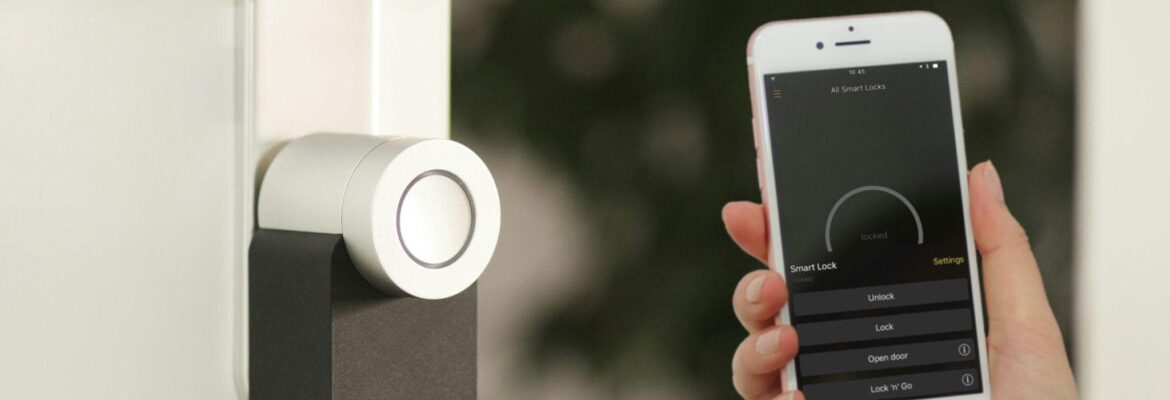

Smart homes are no longer a futuristic concept reserved for tech enthusiasts. Millions of households worldwide now rely on interconnected devices — from voice assistants and smart thermostats to connected security cameras and intelligent lighting systems. This rapid adoption has brought unprecedented convenience. However, it has also introduced a challenge that the industry can no longer afford to treat as secondary: privacy.
A Networked Home Is a Data-Generating Home
Every smart device in a home is, at its core, a data-collection point. A smart thermostat learns your daily schedule. A connected doorbell captures footage of everyone who passes your front door. A voice assistant processes audio in near-real time. Individually, each data stream may seem benign. Collectively, they paint an intimate portrait of who you are, when you sleep, who visits you and how you live.
This is not inherently problematic — data is what makes these devices useful. The critical question is: who controls that data, where does it go, and how is it protected?
The Home Gateway as the Privacy Frontier
Home gateways — the central hubs that manage traffic between a local network and the broader internet — sit at the most strategic position in the smart home architecture. They are the gatekeepers. And as the ecosystem around them grows more complex, their role in enforcing privacy policies becomes increasingly vital.
Historically, gateway manufacturers focused on performance: speed, range, uptime. Privacy was considered an upstream or downstream issue — someone else’s concern. That paradigm is shifting. Modern gateway design must incorporate privacy-by-default principles at the network layer, including:
- Traffic inspection and anomaly detection to identify when a device is sending unusual volumes of data to unknown endpoints
- Local data processing to reduce the need for cloud transmission altogether
- Granular device-level controls that allow users to restrict what any single device can communicate externally
- Transparent logging that gives homeowners visibility into data flows within their own networks
When privacy is embedded at the gateway level, it becomes structural — not optional, not an afterthought, not dependent on each individual manufacturer getting it right.
Regulation Is Accelerating the Conversation
Governments are catching up. The EU’s General Data Protection Regulation set the early standard, and similar frameworks are emerging across the globe. In the United States, the FTC has intensified scrutiny of IoT data practices, while the UK’s Product Security and Telecommunications Infrastructure (PSTI) Act now mandates baseline security requirements for consumer connectable devices — requirements that increasingly intersect with privacy.
Industry bodies, standards organizations, and working groups are responding in kind. The challenge is ensuring that standards development keeps pace with the actual deployment of devices in real homes — a gap that has historically allowed privacy vulnerabilities to persist long after they are identified.
What the Industry Must Do Now
The smart home privacy conversation needs to move from awareness to architecture. A few priorities stand out:
Interoperability with privacy built in. Initiatives like Matter have made device interoperability a mainstream expectation. The next frontier is ensuring that interoperability frameworks carry privacy guarantees alongside functional ones. Shared standards should include data minimization requirements and consent frameworks, not just protocol compatibility.
User education without user burden. Privacy controls are only effective if people use them. Interfaces must be designed so that strong privacy settings are the easiest settings to choose — not buried in configuration menus that only network engineers can navigate.
Shared accountability across the value chain. Privacy failures in smart homes rarely have a single cause. Device manufacturers, platform operators, ISPs, and gateway vendors all have a role. The industry needs clear accountability frameworks that assign responsibility appropriately rather than allowing it to diffuse entirely.
The National Institute of Standards and Technology (NIST) has published practical guidance on IoT cybersecurity that increasingly covers privacy dimensions — a useful baseline for manufacturers looking to align with emerging expectations (NIST IoT Cybersecurity). Similarly, the Internet Society’s Online Trust Alliance provides actionable IoT security and privacy best practices that map directly to gateway and device design decisions (Internet Society OTA).
The Stakes Are Personal
Privacy in the smart home is not a compliance checkbox. It is a fundamental question about whether people can trust the technology inside the most intimate space in their lives. The home gateway community is uniquely positioned to lead here — not just by connecting devices, but by ensuring that the connected home remains a safe, private, and trusted environment for the people who live in it.
The infrastructure is in place. The standards development is progressing. The moment to make privacy structural — not supplemental — is now.